

Our Missions
Andra is entrusted by the French State with carrying out the public service missions associated with the long-term management of radioactive waste.
These missions include the inventory and characterisation of radioactive waste, the development and operation of disposal facilities, environmental monitoring, research and innovation, stakeholder engagement, knowledge preservation and international cooperation.
By combining operational experience, scientific expertise and a commitment to transparency, Andra works to ensure the protection of people and the environment, both today and for future generations.
Understanding and Tracking Radioactive Waste
As France’s national radioactive waste management agency, Andra is responsible for producing and publishing the National Inventory of Radioactive Materials and Waste.
The National Inventory is a key tool for planning the long-term management of radioactive waste in France. It supports the development of national waste management strategies, informs decisions on future disposal facilities and helps anticipate future needs under different energy policy scenarios.
The Inventory is updated annually and provides a comprehensive overview of radioactive materials and waste present in France, including their nature, origin and estimated volumes.
Every five years, Andra also publishes a prospective inventory based on a range of long-term scenarios for the French nuclear programme, including reactor lifetime extensions, new-build programmes and nuclear phase-out assumptions.
The National Inventory is available online, together with additional information and open data resources.
Transparency is a key principle of the National Inventory process. Its preparation is overseen by a dedicated steering committee bringing together representatives from government ministries, nuclear safety authorities, evaluation bodies, waste producers and civil society organisations. This governance framework helps ensure the robustness, transparency and credibility of the Inventory.
Managing Radioactive Waste
Andra is responsible for the safe management and disposal of radioactive waste accepted at its facilities. As France's national radioactive waste management agency, it ensures that waste is managed in accordance with strict safety, security and environmental protection requirements throughout their lifecycle.
Waste management activities cover the entire process, from waste acceptance and verification to disposal and long-term monitoring. At every stage, rigorous controls are implemented to ensure the protection of people and the environment, both today and in the future.
Today, more than 90% of France's radioactive waste already has an operational disposal solution within Andra's facilities.
Andra's Waste Management Process
From waste acceptance to disposal and facility monitoring, Andra applies a rigorous management process to ensure the protection of people and the environment over the long term.
Waste Acceptance Criteria
Before radioactive waste can be accepted at one of Andra's disposal facilities, it must comply with a set of technical, radiological, chemical and physical requirements known as Waste Acceptance Criteria (WAC). These criteria ensure that the waste is compatible with the disposal facility and can be managed safely over the long term.
Waste identification and declaration
Waste producers are required to identify and characterize their waste before it is delivered to Andra. Information regarding the nature, origin and characteristics of the waste is declared through dedicated systems, allowing the Agency to verify compliance with disposal requirements and maintain traceability throughout the waste management process.
Treatment
Prior to disposal, radioactive waste may undergo treatment by the waste producer to reduce its volume, improve its stability or condition it into a suitable waste package. The treatment process depends on the characteristics of the waste and the requirements of the intended disposal facility.
Controls
The Agency performs a series of administrative, radiological and technical controls before and during waste acceptance. These checks verify the characteristics of the waste package and ensure compliance with the facility's acceptance requirements.
Transport
Radioactive waste is transported to Andra's disposal facilities under strict regulatory requirements designed to ensure the protection of workers, the public and the environment. Transport operations are carried out using approved packages and specialised transport operators.
Disposal and monitoring
Once accepted, the waste is disposed of within dedicated facilities designed to ensure its safe containment. Throughout the operational life of the facility, Andra carries out continuous monitoring of the site and its environment in order to verify that safety and environmental protection objectives are met.
Designing Disposal Facilities
The French radioactive waste management strategy is based on disposal solutions adapted to the characteristics of each type of waste. As France's national radioactive waste management agency, Andra is responsible for designing and developing disposal facilities adapted to the different categories of radioactive waste.
Radioactive waste varies considerably in terms of radioactivity levels, lifespan and associated safety requirements. Each disposal facility is therefore specifically designed according to the characteristics of the waste it is intended to receive, whether through near-surface disposal or deep geological disposal.
The objective of these facilities is to ensure the long-term protection of people and the environment by safely isolating radioactive waste for as long as necessary.
Today, more than 90% of France's radioactive waste already benefits from an operational disposal solution. The Agency is currently developing disposal solutions for the remaining waste streams, including:
- High-Level Waste (HLW) and Intermediate-Level Long-Lived Waste (ILW-LL) through the Cigéo deep geological disposal project;
- Low-Level Long-Lived Waste (LLW-LL).
Monitoring Andra's Facilities
Protecting people and the environment does not end once waste has been disposed of. Monitoring is an essential component of Andra's mission and contributes to ensuring the long-term safety of its disposal facilities.
Comprehensive environmental and operational monitoring programmes are implemented at Andra's facilities to verify their performance and ensure that their impact on people and the environment remains extremely low.
Each year, thousands of measurements and samples, including air, water, soil and vegetation analyses, are collected on and around Andra's facilities. The results are regularly reviewed, reported to public authorities and shared with local stakeholders. Monitoring data are also made publicly available through the French National Network for the Measurement of Environmental Radioactivity, operated under the authority of the French Nuclear Safety and Radiation Protection Authority (ASNR).
Monitoring the Aube Disposal Facilities (CSA)
The CSA disposal facility is subject to continuous environmental and operational monitoring throughout its period of operation. Air, groundwater, surface water, vegetation and other environmental indicators are regularly sampled and analysed to verify the effectiveness of the facility and its protective systems.
The results confirm that the impact of the facility on people and the environment remains extremely low and well below regulatory limits.
Monitoring the Manche Disposal Facility (CSM)
Although the CSM disposal facility no longer receives waste, it remains under active surveillance. A dedicated monitoring programme continues to assess the condition of the facility and its surrounding environment.
Environmental measurements, inspections and technical assessments are carried out regularly to verify the long-term performance of the disposal system and ensure the continued protection of people and the environment.
Research and Innovation
Research and innovation are essential to the long-term management of radioactive waste and the continuous improvement of disposal solutions.
As part of its missions, the Agency conducts and supports scientific and technical studies aimed at improving knowledge of radioactive waste, disposal systems and their surrounding environment. These activities contribute to the design, operation, monitoring and long-term safety assessment of disposal facilities.
Research activities cover a wide range of disciplines, including geology, hydrogeology, materials science, environmental sciences, monitoring technologies, robotics, digital tools and social sciences.
Andra develops these activities in collaboration with French and international research organisations, universities and industrial partners, while also participating in major European and international research programmes.
Site Remediation and Collection of Radioactive Objects
As part of its public service mission, Andra is responsible for remediating sites contaminated by radioactivity when no responsible operator can be identified or when the original operator no longer exists. The Agency is also entrusted with collecting and managing radioactive items held by private individuals, local authorities and public institutions.
The Radium Craze

During the first half of the twentieth century, radioactive substances, particularly radium, were widely used in consumer products, industrial applications, medical treatments and scientific activities. Although these uses have long since ceased, radioactive objects and materials are still occasionally discovered in homes, schools, laboratories, hospitals and public buildings.
Today, Andra contributes to the identification and safe management of these legacy items in order to protect people and the environment.
Site remediation
In certain situations, radioactive contamination may remain on former industrial, research or commercial sites where the original operator can no longer be identified or held responsible.
On behalf of the French State, Andra carries out remediation operations aimed at identifying radioactive contamination, securing affected areas, removing radioactive materials where necessary and restoring sites to a safe condition. These activities are conducted in close coordination with public authorities and technical experts.
Collection and management of radioactive objects
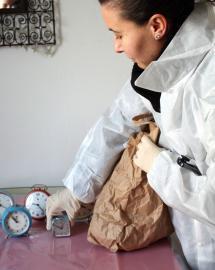
Andra organises the collection of orphan radioactive sources and legacy radioactive objects discovered by individuals, institutions or local authorities.
The Agency provides technical support to evaluate the nature of these objects and determine the most appropriate management pathway. Once collected, these items are transported, characterised and managed through dedicated waste management solutions adapted to their radiological characteristics.
This activity contributes to preventing the uncontrolled presence of radioactive materials outside regulated nuclear facilities and helps ensure their safe long-term management.
Stakeholder Engagement and Public Information
As a public agency, Andra considers transparency, access to information and stakeholder dialogue to be essential components of radioactive waste management.
The development and operation of waste management facilities require long-term engagement with a wide range of stakeholders, including local communities, elected representatives, public authorities, non-governmental organisations and civil society.
Throughout its projects and activities, Andra contributes to public information and participates in consultation and dialogue processes established under the French regulatory framework. These exchanges help inform decision-making, improve mutual understanding and strengthen the transparency of radioactive waste management programmes.
The Agency's experience in stakeholder engagement and public dialogue is regularly shared within international cooperation activities and has become an important area of exchange with foreign counterparts facing similar societal challenges.
Preserving and Transmitting Knowledge
The management of radioactive waste requires decisions and responsibilities that extend far beyond the present generation. Some radioactive waste remains hazardous for very long periods of time, making the preservation and transmission of knowledge an essential component of long-term safety.
As part of its missions, Andra develops and implements measures to ensure that information about radioactive waste, disposal facilities and management decisions remains available, understandable and accessible over time.
This objective involves preserving technical data, operational records, scientific knowledge and historical information related to waste management facilities and projects. It also requires reflecting on how future generations may access, interpret and use this information.
Andra works with experts from a wide range of disciplines, including information management, history, archives, social sciences and long-term memory preservation, in order to develop approaches adapted to very long timescales.
The Agency's experience in knowledge management and memory preservation is regularly shared through international cooperation, as many radioactive waste management organisations face similar challenges regarding the transmission of information over generations.
Sharing Expertise Internationally
International cooperation is an integral part of Andra's mission. By participating in exchanges with foreign counterparts, international organisations and collaborative initiatives, the Agency contributes to the advancement of radioactive waste management while continuously improving its own practices and projects.
Through technical exchanges, working groups, workshops, research programmes and cooperation agreements, Andra shares its operational experience, scientific knowledge and feedback gained from the management of radioactive waste and the development of disposal solutions in France.
These activities contribute to the dissemination of knowledge, the promotion of good practices and the strengthening of international cooperation in the field of radioactive waste management.
More information on Andra's international activities and cooperation framework is available in the International Cooperation section.