

Cooperation Agreement between Andra and BGE: sharing knowledge and expertise on radioactive waste management
On 6 May 2026, Lydie Evrard, CEO of Andra, and Iris Graffunder, CEO of the Bundesgesellschaft für Endlagerung (BGE), signed a cooperation agreement, building on the long-standing relationship between the two organisations.
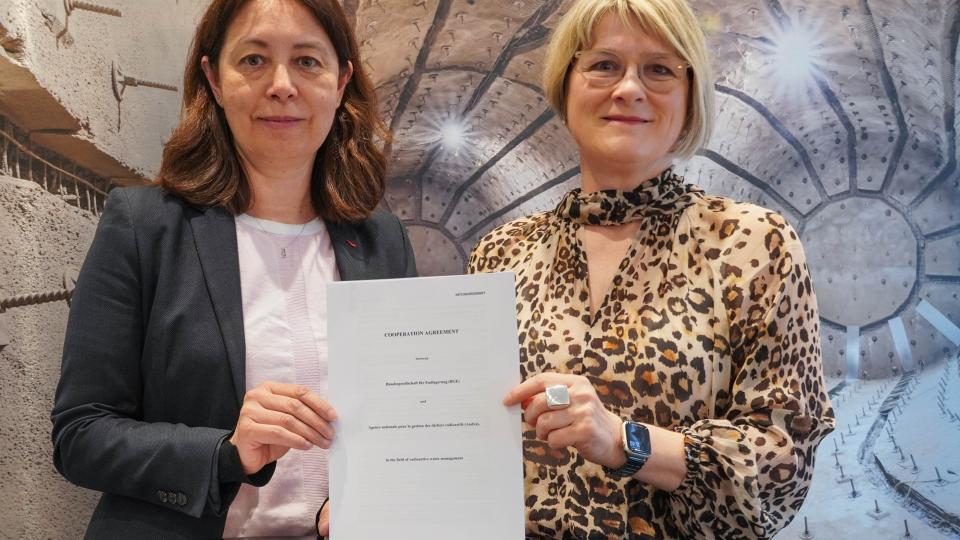
Through this agreement, Andra and BGE are strengthening their cooperation in the field of radioactive waste management. The agreement reflects their shared commitment to continuing collaborative work and provides a framework for cooperation over the next five years. A first cooperation agreement had been signed in 2018, following the creation of BGE in 2017, for a period of five years.
The renewed Andra-BGE cooperation agreement is based on mutual benefit and reciprocity. It covers the main areas of expertise of both organisations, including exchanges on their respective deep geological repository projects through the sharing of technical information, operational experience and site visits.
On the ground
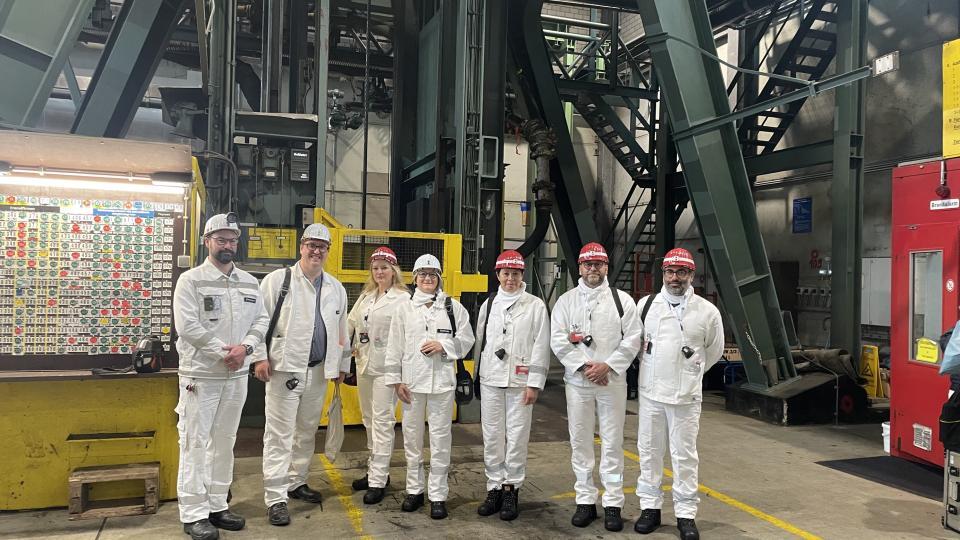
Alongside the signing of the cooperation agreement, Andra representatives visited the Asse II mine, a former salt mine used as a disposal facility for low- and intermediate-level radioactive waste between 1967 and 1978.
Located 700 metres underground, the site has experienced mine instability for several decades as a result of brine infiltration. In 2013, the German Parliament passed a law requiring the retrieval of the waste, a technically, industrially and operationally complex undertaking.
The visit gave Andra the opportunity to learn more about the operations conducted by BGE at the site and to observe the monitoring systems implemented there.
For the disposal of low- and intermediate-level radioactive waste, the German government selected the Konrad site in 2019, a former iron mine located in Lower Saxony. Situated 850 metres underground, the facility will have a total disposal capacity of 303,000 cubic metres and is expected to become operational in 2030.
Mutual exchange of experience
As part of Germany’s nuclear phase-out policy initiated in 2011, the country is also working on the development of a deep geological repository for the most radioactive waste. In this context, BGE is interested in benefiting from Andra’s experience with the Cigéo project.
The German organisation is particularly interested in Cigéo’s step-by-step development approach, the long-term framework developed in France since 1991, and Andra’s knowledge of disposal in clay formations, built through the scientific and industrial work carried out at the Agency’s Underground Research Laboratory. BGE is also interested in Andra’s communication strategy and dialogue with stakeholders regarding the Cigéo project.
For its part, Andra is interested in BGE’s stakeholder information and dialogue strategy and is closely following Germany’s site selection process for a deep geological repository. As part of this siting process, the entire German territory was initially considered before being progressively narrowed down to half, and now to approximately one quarter, of the country’s territory. Salt, granite and clay geological formations remain under consideration.
Focus on BGE
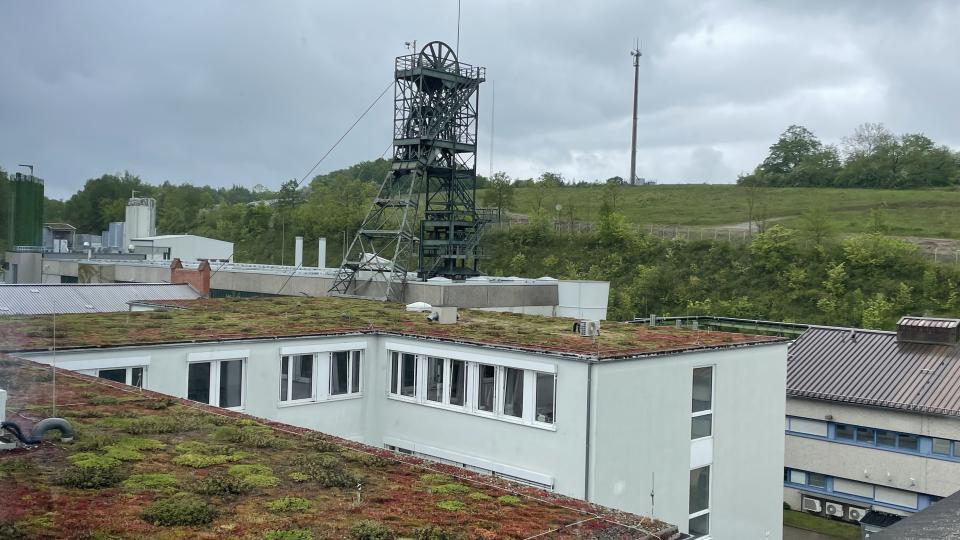
Created in 2017, the Bundesgesellschaft für Endlagerung (BGE) is the German federal public organisation responsible for the long-term management of radioactive waste.
In the context of Germany’s nuclear phase-out policy, launched after the Fukushima accident and completed in 2023 with the shutdown of the country’s last nuclear power plants, BGE now plays a central role in Germany’s radioactive waste management strategy.
Its missions include:
- siting a deep geological repository for spent fuel and high-level radioactive waste;
- developing and operating future disposal facilities for low- and intermediate-level radioactive waste;
- managing and remediating former sites such as Asse II, Morsleben and Gorleben.