

Nuclear Context in France
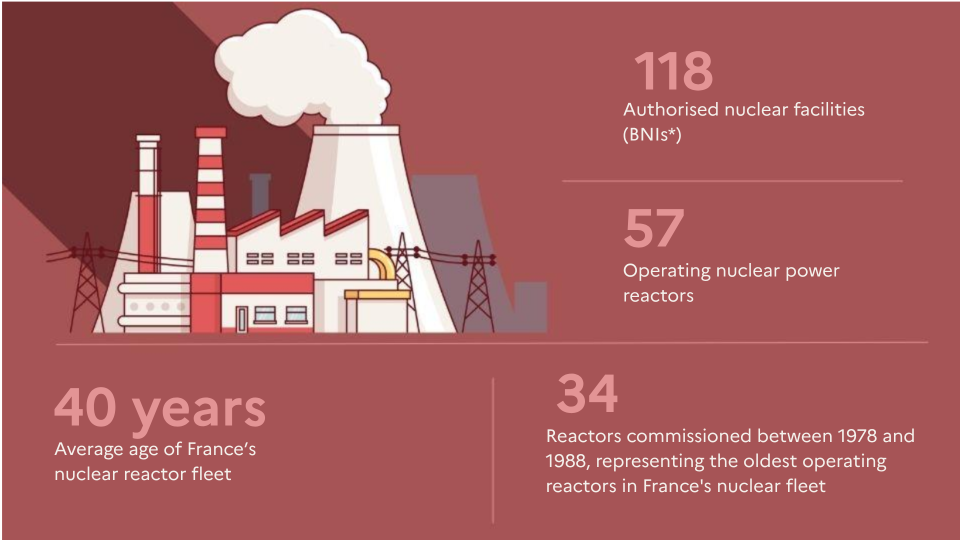
France's nuclear sector comprises a wide variety of facilities, including nuclear power reactors, research centres, fuel cycle facilities and waste management installations. Many of these facilities are classified as Basic Nuclear Installations (BNIs), regulated under French nuclear safety legislation and subject to specific oversight by the competent authorities.
The operation, maintenance and decommissioning of these facilities generate radioactive waste streams of different categories, requiring dedicated management and disposal solutions adapted to their characteristics.
France's Nuclear Programme
With 57 operating nuclear reactors across 18 sites, nuclear power generates over 65% of France's electricity each year, making France one of the world's leading nuclear nations and the country with the largest nuclear fleet relative to its population.
Decommissioning Nuclear Facilities
Alongside its operating facilities, France is also managing a growing number of nuclear installations that have reached the end of their operational lifetime.
Today, 36 nuclear installations are permanently shut down, and several of which are undergoing decommissioning. These include first-generation reactors shut down between the late 1960s and early 1990s, former research laboratories and uranium enrichment facilities. Decommissioning generates both conventional and radioactive waste, with conventional waste accounting for the largest share.