

Sellafield and LLWR: two visits to better understand the UK’s nuclear ecosystem and strengthen Franco-British collaboration
Teams from Andra were in the UK on 23 and 24 July for a two-part visit: to the Sellafield site, the UK’s largest nuclear complex, and to the Low Level Waste Repository (LLWR), which specialises in the disposal of low-level radioactive waste. This provided an opportunity for the Agency and its British counterpart to exchange views, promote knowledge-sharing and strengthen their bilateral cooperation.
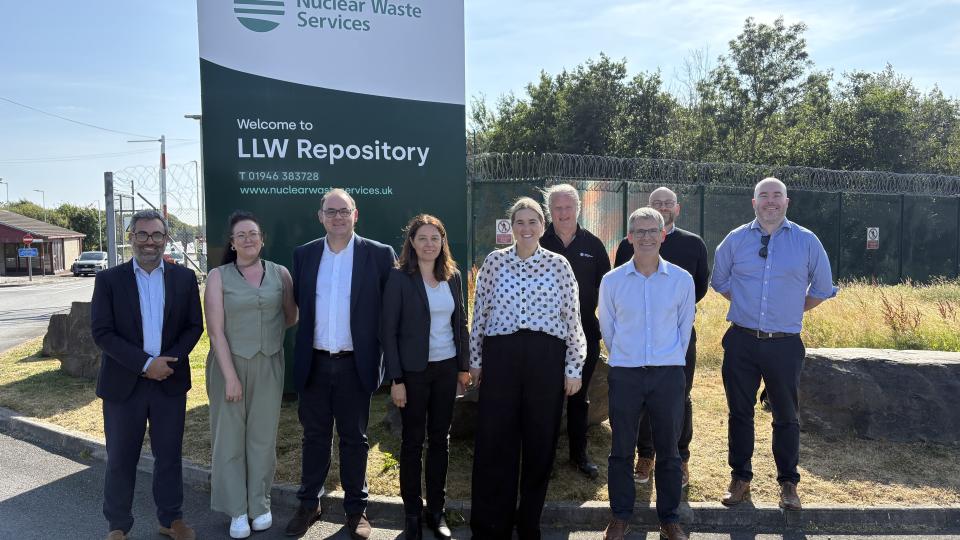
The LLWR Disposal facility expands its capacity
In operation since 1959, the Low Level Waste Repository (LLWR) in Drigg has, to date, disposed of approximately 1,000,000 m³ of low-level radioactive waste. The disposal system has undergone several design changes. Initially placed in trenches, the packages are now disposed of in structures on a concrete platform, following a design similar to that of the CSA. The site is scheduled to remain in operation until 2135.
NWS (see box), which is responsible for the facility, has launched a major project (the STIM project, standing for Southern Trench Interim Membrane) to reinforce the site’s cover, which will be carried out in several phases. Phase 1 of the project involves the supply of around 299,000 tonnes of cover material, to be transported to the site by around 339 trains.
Sellafield: the challenge of decommissioning in the UK
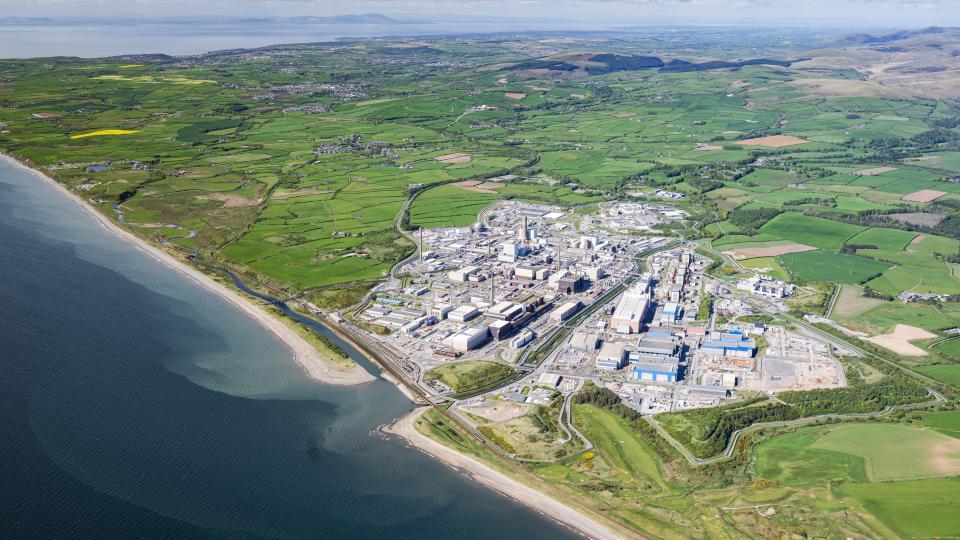
The tour continued a few kilometres further on, at the Sellafield nuclear site, known for being home to the world’s first nuclear power station. In 1947, the site opened with the aim of producing plutonium, a radioactive element intended for the UK’s nuclear deterrent. As national priorities evolved, the first nuclear power station was built. Facilities for processing spent nuclear fuel were also established, along with storage facilities for various types of radioactive waste. Today, the Sellafield site is one of the largest decommissioning and remediation projects in Europe.
Following a general presentation of the UK’s deep geological disposal programme for the most radioactive waste, the Geological Disposal Facility (GDF), Andra staff were invited to visit several of the site’s facilities: the interim storage facility – pile fuel cladding silo (PFCS) for waste from the UK’s first nuclear fuel, the vitrification plant for high-level waste from spent fuel reprocessing, and the conditioning plant for intermediate-level waste from reprocessing operations.
A long-standing bilateral cooperation, going ever deeper
Bilateral cooperation between Andra and the NDA has been part of a long-term strategy since 2008. On 9 December 2024, Andra and the NDA renewed their bilateral cooperation agreement for a further five years.
This agreement covers both surface disposal of radioactive waste – for which both countries have operational facilities – and deep geological disposal. As part of this cooperation, six bilateral working groups are addressing topics such as R&D, geological characterisation, the design of geological repositories, environmental monitoring, waste inventories, communication and human resources.
The visits to the LLWR and Sellafield sites form part of this cooperation framework, aimed at gaining a better understanding of each other’s projects and further developing this bilateral relationship, which enables the technical teams at Andra and NDA/NWS to exchange views and share their respective experiences in managing similar projects.
What is the NDA’s strategy?
The Nuclear Decommissioning Authority (NDA) is the public body responsible for overseeing and managing the decommissioning and remediation of the country’s nuclear facilities. Within the NDA group, Nuclear Waste Services (NWS), the equivalent of Andra, is the body responsible for managing all of the UK’s radioactive waste.
The UK has inherited a complex nuclear legacy stemming from historic military programmes, the development of the first reactors, nuclear power generation and fuel reprocessing activities. These activities have generated significant volumes of radioactive waste requiring very long-term management and involve the management of ageing facilities. The NDA currently oversees 18 sites, and the country has one of the largest stockpile of radioactive waste to be managed in the world.
The Nuclear Decommissioning Authority (NDA) sets the long-term direction for the management, decommissioning and rehabilitation of the UK’s nuclear heritage. The decommissioning, waste management and rehabilitation of sites constitute the NDA’s core mission. The strategy incorporates major developments, including the decommisisoning of advanced gas-cooled reactors, support to UK Government for the revival of civil nuclear power and the development of defence nuclear capabilities, and the strengthening of waste management infrastructure.
This strategy also provides for the decommissioning of facilities under the safest possible conditions, as well as the recovery of radioactive waste, the reduction of environmental risks and the gradual decontamination of sites.
The similarities between the long-standing French and British programmes in terms of technology and the fuel cycle, dating back to the start of their nuclear programmes, open up prospects for ever-greater industrial and research cooperation in the fields of remediation, decommissioning and waste management.