The VLLW Disposal Facility (Cires)
Located in the municipalities of Morvilliers and La Chaise, in the Aube department, The Industrial Facility for Grouping, Storage and Disposal (Cires) has been dedicated to the disposal of Very Low-Level Waste (VLLW) since 2003
The facility also includes installations dedicated to the collection, sorting and treatment of radioactive waste generated mainly by non-nuclear activities, as well as storage facilities for radioactive waste for which no long-term disposal solution is yet available.
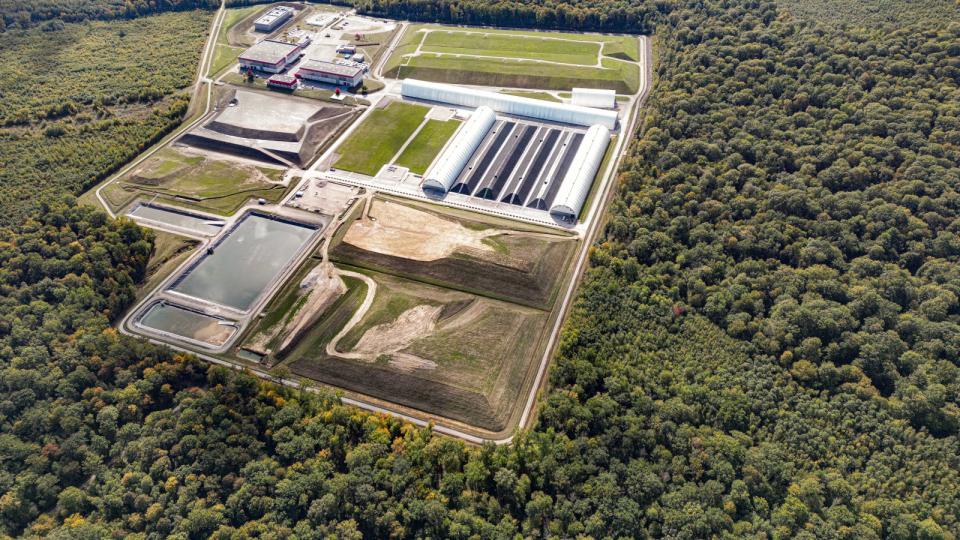
The Cires is an installation classified for environmental protection (ICPE), operated by Andra. The site covers a total area of 52.5 hectares, more than 25 hectares of which are dedicated to waste disposal. The facility is authorised to dispose of 950,000 m³ of VLLW. At the end of 2025, 53.1% of this authorised disposal capacity had been used.
VLLW mainly consists of rubble, soil, scrap metal and other materials that have been very slightly contaminated. It originates from the dismantling or operation of nuclear facilities, as well as from conventional industries using naturally occurring radioactive materials. VLLW may also result from the clean-up and rehabilitation of sites contaminated by radioactivity.
The radioactive waste collected, sorted and treated at Cires comes from approximately 1,000 non-nuclear-power waste producers located throughout France, including hospitals, pharmaceutical laboratories and various industrial sectors. This waste is highly diverse and includes gloves, plastics, solvents, laboratory coats, lightning conductors and radioactive objects held by private individuals, such as luminous objects and radium fountains.
Most of this waste is either VLLW or Low- and Intermediate-Level Short-Lived Waste (LILW-SL), for which disposal routes already exist. A small proportion consists of Low-Level Long-Lived Waste (LLW-LL) or Intermediate-Level Long-Lived Waste (ILW-LL), for which disposal solutions are still under development. These wastes are stored at Cires pending the availability of a disposal facility.
Around forty people work directly at Cires. Additional Andra staff based at the Agency's headquarters and at the Aube Disposal Facility also contribute to the operation of the site.
The Cires
Cires Facilities
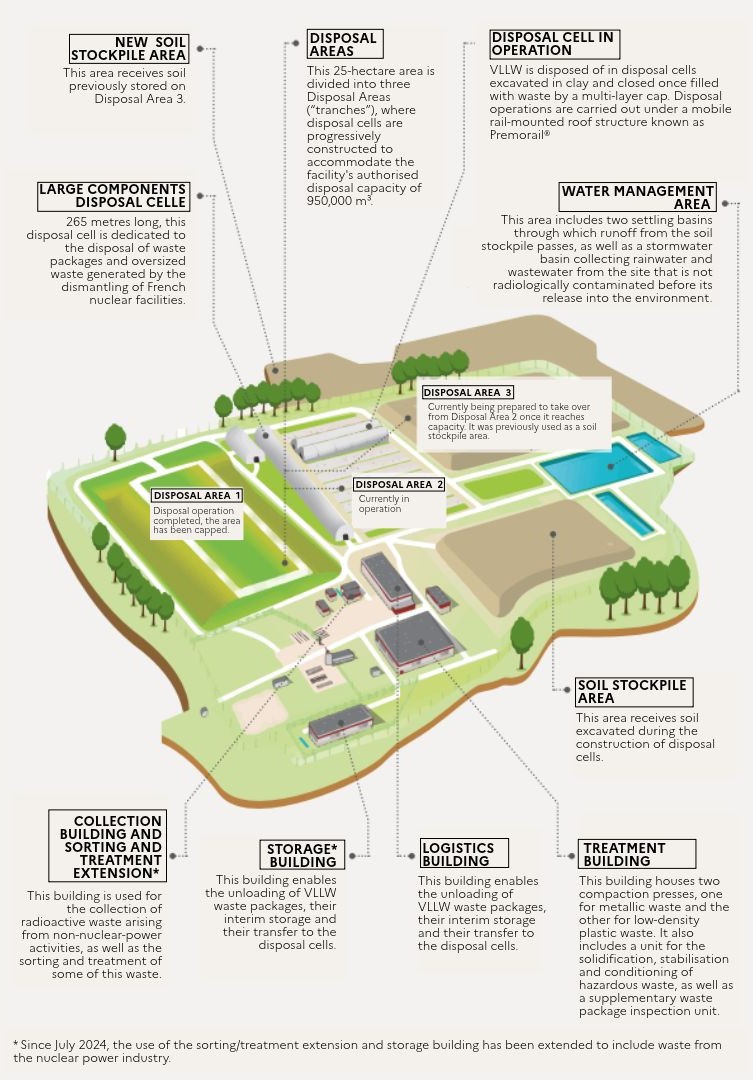
The Cires brings together several complementary facilities dedicated to the disposal, storage and management of radioactive waste.
Treatment of VLLW
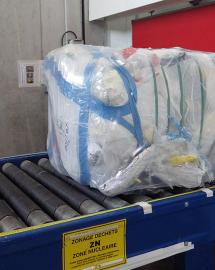
Cires is equipped with two presses used to reduce the volume of compactable waste:
- A package press designed for compacting metallic waste such as light scrap metal;
- A baling press dedicated to low-density waste such as plastics and insulation materials.
The facility also operates a solidification unit for liquid waste, including sludge and operational wastewater. These wastes are mixed with a hydraulic binder to produce a solid and stable waste form.
Disposal of VLLW
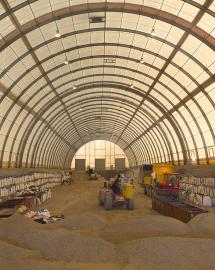
VLLW packages are disposed of in cells measuring approximately 176 metres in length and 26 metres in width, excavated to a depth of 8.5 metres in clay.
Disposal operations are carried out under a mobile rail-mounted roof system known as Premorail®, which protects the waste from weather conditions during operations.
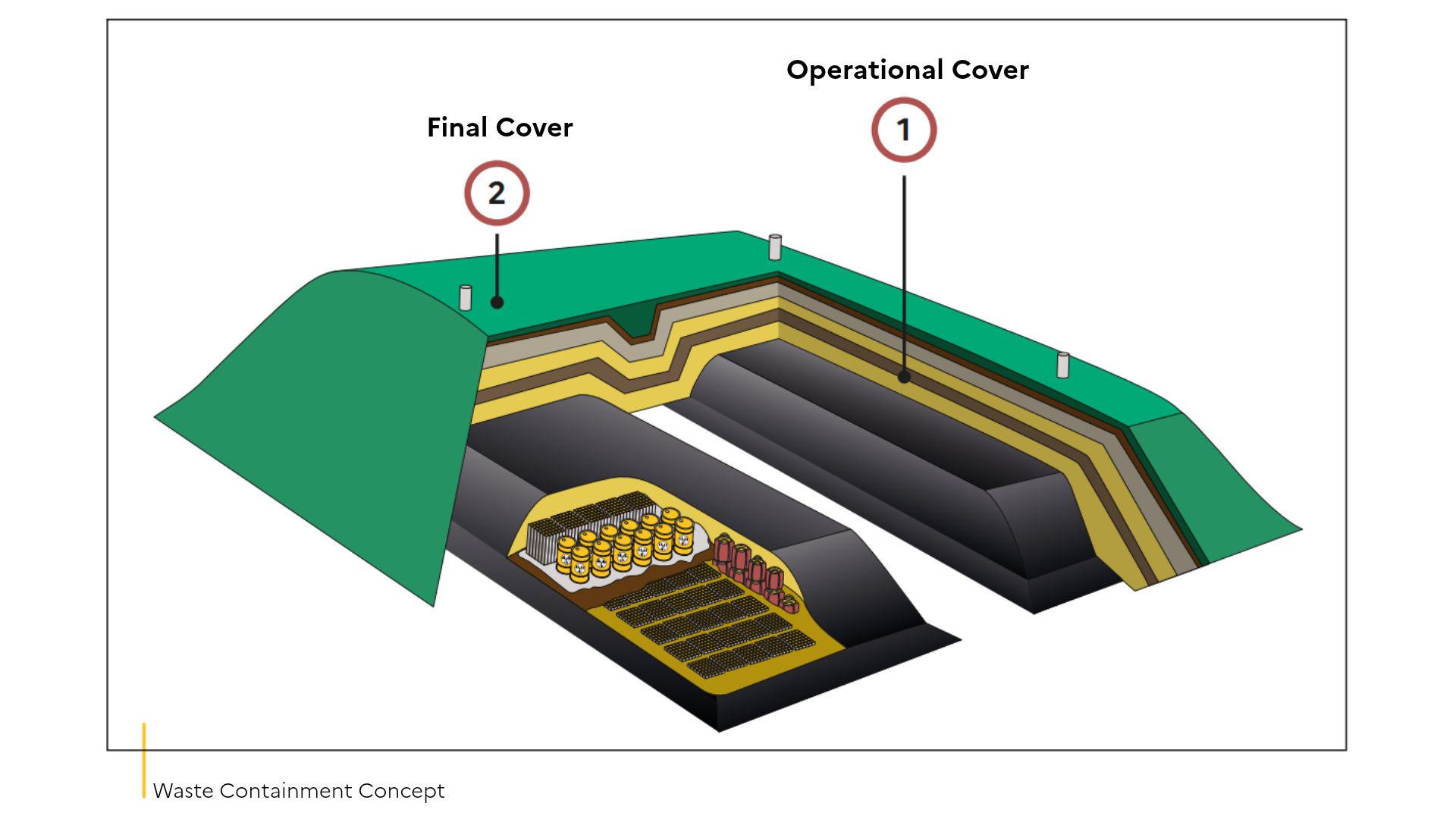
Once a disposal cell has been filled, it is closed using a layer of sand, a high-density polyethylene membrane ensuring the watertightness of the disposal structure, and a protective geotextile resistant to ultraviolet radiation. A clay cover is then placed above the disposal cells to ensure the long-term confinement of the waste.
Oversized Waste
As the dismantling of nuclear facilities progresses, Cires is increasingly required to manage oversized waste components. Until 2015, these components were disposed of together with other waste. However, their size and weight, often exceeding 10 metres in length and weighing several tens of tonnes, created significant logistical constraints. Disposal operations required the cell to be filled up to ground level and a reinforced concrete slab to be installed before oversized components could be emplaced.
This approach was notably used for the disposal of:
- Steam generators from the Chooz A nuclear power plant;
- A pressuriser from the Chooz A nuclear power plant.
To improve the management of such components, Andra developed a dedicated disposal cell, which entered service at the end of 2017.
This dedicated facility has since been used for the disposal of:
- Heat-exchanger vessels from Chinon;
- Obsolete transport packages from Orano.
Safety of VLLW Disposal
The disposal of VLLW at Cires relies on a multi-barrier system designed to ensure the long-term protection of people and the environment.
Waste is disposed of in surface cells approximately 176 metres long and 26 metres wide, excavated into clay at a depth of 8.5 metres. Empty spaces between waste packages, or between waste items themselves, are filled with sandy materials.
The long-term confinement of the waste is ensured by several complementary barriers:
- A high-density polyethylene geomembrane installed at the base and along the sides of each disposal cell before operation begins. After the cell has been filled, a second membrane is placed over the waste and thermally welded to the first, creating a continuous containment system;
- An envelope of natural clay materials providing very low permeability. The upper part of this envelope forms the final cover, which consists of several layers of materials separated by geocomposite membranes. Each layer plays a specific role in either ensuring watertightness or draining rainwater;
- The geological environment, consisting of the highly impermeable Aptian clay formation located beneath the disposal cells.